Documenting the dirty side of the international art market. @artcrime2
Sunday, April 5, 2026
Bold Art Heist in Italy Targets Masterpieces by Renoir, Cézanne, and Matisse!
A daring and highly coordinated art theft has shaken Italy’s cultural world after thieves made off with several valuable paintings from a museum near Parma.
The robbery took place at the Magnani-Rocca Foundation, a well-known institution that houses an impressive collection of modern and Impressionist art. Late in the evening on March 22, 2026, a group of four masked individuals executed a swift break-in that lasted only a matter of minutes.
According to investigators, the thieves forced entry into the building and moved with precision, suggesting prior knowledge of the museum’s layout and security systems. In less than three minutes, they managed to locate and steal three significant works by renowned artists: Pierre-Auguste Renoir, Paul Cézanne, and Henri Matisse.
Among the stolen pieces were Odalisque on the Terrace by Matisse, Still Life with Cherries and Peaches by Cézanne, and a painting commonly referred to as Fish by Renoir. Together, the artworks are estimated to be worth around €9 million (approximately $10 million USD), though experts note that their cultural value far exceeds their market price.
Fish by Pierre-Auguste Renoir
Odalisque on the Terrace by Henri Matisse
Still Life with Cherries by Paul Cézanne
The museum’s alarm system was triggered during the break-in, prompting a rapid response from law enforcement. However, the thieves managed to flee the scene just moments before authorities arrived. No injuries were reported, and the building itself sustained only minor damage.
Investigators believe the operation was carefully planned and executed by professionals. The speed, coordination, and selective targeting of specific artworks indicate that the thieves likely had inside knowledge or conducted detailed surveillance beforehand.
Selling the artwork in the open market would be extremely difficult, making them nearly impossible to move through legitimate channels. As a result, the thieves may attempt to use the paintings as leverage—either by demanding a ransom from the museum or negotiating a reward for their return. Otherwise they could be used as a pawn in the criminal underworld traded for other illicit commodities or negotiations.
Art theft of this nature is not uncommon in Europe, where organized criminal groups sometimes target high-profile works for exactly this kind of purpose. The case has drawn comparisons to previous heists in which stolen masterpieces were hidden for years or used as bargaining chips in criminal negotiations.
Italian police, working alongside international agencies, have launched an ongoing investigation. Surveillance footage and forensic evidence are being analyzed, and authorities are appealing to the public for any information that could help recover the stolen works.
For now, the whereabouts of the paintings remain unknown, and the incident serves as a stark reminder of the vulnerability of even well-protected cultural institutions.
J.Larson
Friday, December 12, 2025
The jewel thieves knew where to strike Louvre Museum thanks to a 2018 security audit!
Louvre Museum window jewel heist location 2025
A newly uncovered 2018 security audit of the Louvre—commissioned from Van Cleef and Arpels — had explicitly warned that the balcony above the Apollo Gallery was a major security vulnerability, noting it could be reached using a freight lift and lacked full camera coverage. This is the same entry route used in the October 19, 2025 heist in which thieves stole $102 million in jewels in under seven minutes!
The audit had never been shared with Paris prosecutors and was reportedly not passed on during leadership changes at the museum; current Louvre president Laurence des Cars found it only after ordering a post-heist review. The revelation heightens suspicions of an insider leak.
The investigation is widening: four additional suspects were arrested on November 25, including the fourth alleged member of the break-in team, all with ties to Aubervilliers. Earlier arrests had already led to charges of organized theft and conspiracy. Most of the stolen jewels, including pieces linked to Napoleon, remain missing.
The incident has intensified scrutiny of longstanding security flaws at the museum. Apparently, the Louvre has launched an €80 million security overhaul, the first phase beginning in December, and is simultaneously addressing structural concerns in the Sully wing as part of a larger €800 million renovation program.
It’s particularly striking—and unfortunate—that such a massive theft was required to spur serious improvements to core security, especially after years in which the museum’s protective efforts were more focused on managing activist disruptions like “Just Stop Oil” soup-throwing incidents rather than addressing deeper systemic vulnerabilities.
J.Larson
Monday, October 13, 2025
Police Seize Suspected Dalí Forgeries in Italy
Police officers displayed 21 artworks they think are forgeries of Salvador Dalí’s pieces after seizing them at an exhibition in Parma, Italy.Credit...Carabinieri/Handout, via Via Reuters
The Carabinieri Art Squad aka Italy's art police seized 21 suspected fake Salvador Dalí lithographs from a Parma exhibition titled “Salvador Dalí, Between Art and Myth.” The seizure followed months of investigation after similar concerns arose when the show was previously held in Rome.
Lt. Col. Diego Polio of the art theft squad said the exhibit lacked major works and raised red flags. Experts from the Dalí Foundation in Spain reviewed the pieces and questioned the authenticity of 21 lithographs, prompting prosecutors to order their seizure.
The exhibition’s curator, Vincenzo Sanfo, defended the works, claiming they were legitimate and supported by documentation. He said most came from the “Les Chevaux de Dalí” series, published with the artist’s consent in 1983.
The Dalí Foundation, which was not involved in the Parma show, said it had raised concerns about several pieces early on. A major foundation-backed Dalí exhibit opens in Rome this month with fully authenticated works.
The Carabinieri Art Squad is known for tackling both theft and forgery. Just last year, the Carabinieri broke up a Europe-wide forgery ring and seized 450 counterfeit works in Pisa!
J.Larson
Labels:
Art,
art crimes,
Art Forgeries,
Dali,
fakes,
Italy
Sunday, September 28, 2025
Ronald Perelman's $400M Art Insurance Claim Rejected by Judge
Image of Ronald Perelman from Wikipedia
A New York judge has denied billionaire Ronald Perelman’s $400 million insurance claim for five artworks he said were damaged in a 2018 fire at his East Hampton estate. Justice Joel M. Cohen ruled there was no visible or provable damage to the pieces—by Warhol, Ruscha, and Twombly—and that they retained their value.
Perelman argued the fire caused unseen damage like humidity and soot exposure that dulled the works’ vibrancy. Insurers, including Lloyd’s, Chubb, and AIG, countered that the claim was financially motivated, especially following Perelman's financial struggles after Revlon's collapse.
The case, which included expert testimony and nearly 2,000 court filings, raised questions about how art damage is defined. Cohen stopped short of calling Perelman's actions fraudulent, but sided with insurers, stating the artworks remained visually intact and marketable. Ronald Perelman's $400 million insurance claim appears less about damaged art and more like an attempt to cash in amid financial trouble, using his art collection as a pawn for leverage.
J.Larson
Thursday, July 17, 2025
Stolen Roman-Era Erotic Mosaic Returned to Pompeii After WWII Theft
POMPEII, Italy — A Roman-era mosaic panel depicting an erotic scene was returned to Pompeii on Tuesday, more than 80 years after it was stolen by a Nazi officer during World War II.
The mosaic, set on travertine slabs and dating from the late Roman Republic to the early Imperial period, was repatriated from Germany thanks to efforts by the Italian Consulate in Stuttgart. It had been gifted to a German citizen by a Wehrmacht captain stationed in Italy and was recently returned by the heirs of its last owner.
Experts hail the mosaic as a work of "extraordinary cultural interest," representing a shift in Roman art toward intimate, domestic themes. “It marks a moment when love within the home becomes a subject of art,” said Gabriel Zuchtriegel, director of the Pompeii Archaeological Park.
The heirs contacted Italy’s Carabinieri art unit, which confirmed the mosaic’s authenticity and coordinated its return in 2023. Despite limited information on its original excavation site, researchers traced it back to the Pompeii region near Mount Vesuvius.
Now catalogued and preserved, the piece will support education and research at the Pompeii Archaeological Park.
“This return is like healing a wound,” said Zuchtriegel. “It also reflects a change in mindset — where possessing stolen artifacts becomes a burden, not a trophy.”
He also referenced the enduring legend of the "Pompeii curse" — a superstition claiming bad luck befalls those who steal artifacts. Many tourists have returned items over the years, citing misfortunes they believe were linked to the theft.
J.Larson
Friday, June 13, 2025
Thief, Jeffrey Wood, Sentenced to Nearly Two Years
Image of Jeffrey Wood entering court
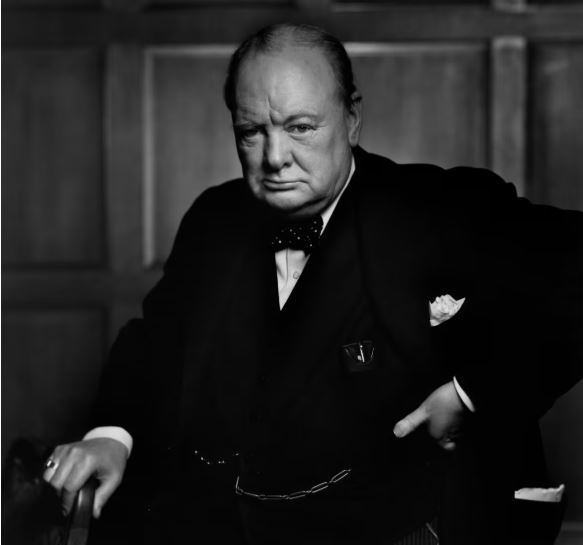
A Canadian man, Jeffrey Wood, has been sentenced to nearly two years in jail for stealing the iconic "The Roaring Lion" portrait of Sir Winston Churchill - original 1941 photo, shot by Yousuf Karsh.
Jeffrey has admitted to taking the image from Ottawa’s Château Laurier hotel between late 2021 and early 2022. He also pleaded guilty to forgery!
The artwork was recovered in 2024 in Italy from an unsuspecting buyer.
Wood claimed he stole "The Roaring Lion" to help his brother, who was struggling with mental health issues. It was later discoveded missing by a hotel staffer in August 2022 after noticing the original had been swapped with a fake.
Though a first-time offender, Wood received "two years less a day," meaning he will serve time in a provincial facility.
The Château Laurier Hotel will undoubtedly enhance security by adding extra hooks when it welcomes back "The Roaring Lion."
-J.Larson
Monday, March 24, 2025
Stolen €5m Francis Bacon painting found in Spain
The painting was one of five stolen in Madrid in July 2015
Spanish police have recovered a €5m Francis Bacon painting that was stolen from banker José Capelo’s Madrid home in 2015. The artwork is part of a set of five portraits created by Bacon, who was friends with Capelo. Three of the stolen paintings were previously recovered in 2017. Two individuals have been arrested in connection with the theft, which has helped authorities locate the missing painting.
A total of 16 arrests have been made since the heist, including those believed to be responsible for the crime. The stolen paintings, valued at €25m, are considered to be the largest contemporary art theft in Spain, with a safe containing jewels and coins also taken. Authorities are continuing their investigation to recover the remaining artwork and apprehend suspects linked to Eastern European organized crime groups.
Francis Bacon, born in Dublin in 1909, was a leading figure in modern art and passed away in Madrid in 1992. His works have sold for record amounts, including his 2013 painting Three Studies of Lucian Freud, which sold for $142m.
J.Larson
Monday, March 17, 2025
Jeffrey Wood, Guilty plea for stealing Winston Churchill portrait from Ottawa hotel
Winston Churchill, 1941 by Yousuf Karsh. This photograph of Britain's wartime prime minister came to define the resilience of the British people. (Yousuf Karsh)
Jeffrey Wood, the man responsible for stealing the renowned portrait of Winston Churchill from Ottawa's Château Laurier hotel during a COVID-19 lockdown in late 2022, pleaded guilty to three charges in court on March 14, 2025. These charges include theft over $5,000, forgery, and trafficking in property obtained by crime. Wood admitted to replacing the original portrait with a fake, despite the hotel’s frame being secured with special bolts that required specific tools to remove. The theft occurred sometime between Christmas and New Year's Day in 2022, but it wasn't noticed until August 2023 when a hotel employee realized the portrait had been swapped out.
The stolen portrait, given to the hotel in 1998 by famed photographer Yousuf Karsh, became the center of a complex, international investigation. After the portrait was sold through a London auction house, it was found in Genoa, Italy, where the buyer unknowingly purchased the stolen piece. Authorities were able to trace the sale back to Wood, who had received over $4,500 for the stolen artwork. Investigators also found a poster print of "The Roaring Lion" in a storage locker, with DNA evidence linking Wood to the crime scene.
Despite the theft's global nature, Wood’s motives were tied to personal struggles. During court proceedings, Wood explained that he committed the crime to support his brother, who was overseas at the time. However, his brother tragically passed away shortly after the theft. His lawyer, Lawrence Greenspon, described the crime as one of “love,” not greed. Wood had also made plans to leave Canada around the time of the theft, which was part of his larger plan to sell the stolen portrait.
Jeffrey Wood arrives at the Ottawa Courthouse on March 14, 2025. He would go on to plead guilty to three charges, including theft and forgery, for stealing a portrait of Windston Churchill from the Château Laurier hotel. (Chris Tanouye/The Canadian Press)
Wood, a 44-year-old from Powassan, Ontario, had worked in various jobs, including as a bank teller and at the Rideau Canal Festival and the Ottawa Jail Hostel. He had also spent time living in Mexico, where he had moved shortly after the theft. Wood’s defense team argues that he should serve his sentence in the community, while prosecutors are pushing for a nearly two-year prison sentence. The final sentencing is set for April 14, 2025.
J.Larson
Tuesday, February 4, 2025
Drent Museum Theft - Three Arrested In Bold Heist Of Ancient Gold Artifacts
In connection with the robbery, three suspects have been arrested in Heerhugowaard, a city located about 114 miles from Assen. However, despite the arrests, the stolen artifacts have yet to be recovered. Local police are continuing their investigation and have released the names and photographs of two of the suspects, Douglas Chesley Wendersteyt and Bernhard Zeeman, in hopes of gathering further information about their movements and any connections that could lead to the recovery of the stolen items.
Police have identified a third suspect, a woman, but have not disclosed her name and are not ruling out the possibility of additional individuals being involved.
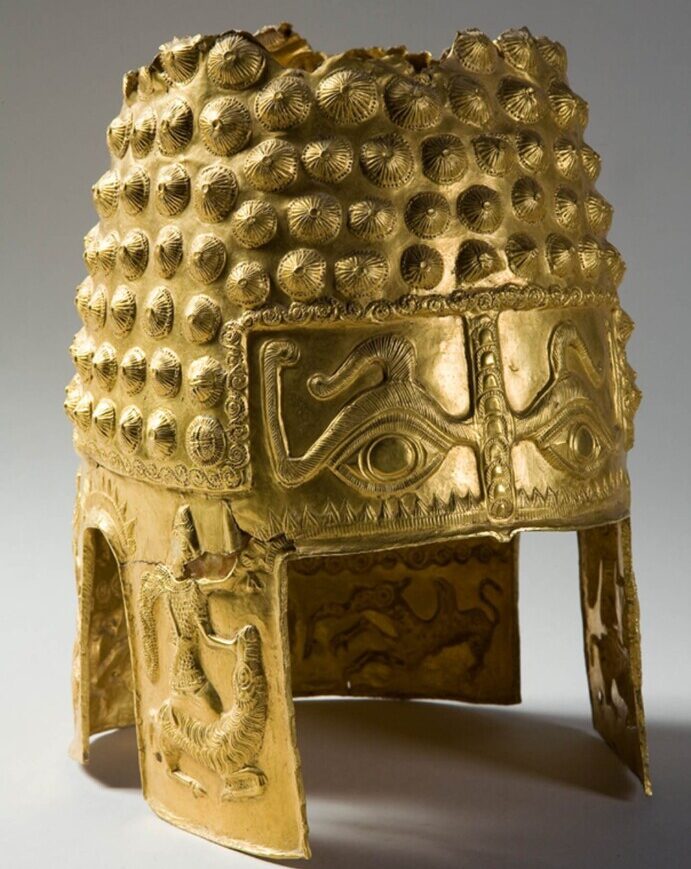
The Gold Helmet of Cotofenesti remains missing after being stolen from the Drents Museum in Assen, Netherlands, during a robbery on Saturday, January 25, 2025. Thieves used explosives to break into the museum and steal four priceless artifacts, including the 2,500-year-old helmet, which is a national treasure in Romania.
The theft is considered a significant loss for Romania, as the helmet is an irreplaceable symbol of their heritage.
“The safe return of the stolen artifacts would be a fantastic next step for all involved," the Drents Museum said in its own statement. “Not only for us, but especially for the Romanian people.”
The thieves stole priceless archaeological artifacts, including this 2,500-year-old gold helmet considered a national treasure in Romania.
-J.Larson
Friday, October 18, 2024
Art Adviser Lisa Schiff Pleads Guilty to Wire Fraud
Image of Lisa Schiff
Once a prominent art adviser, Lisa Schiff, has now pleaded guilty to wire fraud in a New York court on Thursday, admitting to defrauding clients out of millions! She faces two lawsuits from collectors, including one for $1.8 million related to a painting sale and another claiming she misused $6.6 million intended for art purchases.
In January, Schiff filed for bankruptcy, reportedly owing nearly $7 million to various entities. U.S. Attorney Damian Williams stated she misappropriated client funds to support a lavish lifestyle. Schiff has agreed to forfeit $6.4 million, with sentencing set for January, facing a maximum of 20 years in prison. This jail sentance is highly unlikely for a white color crime.
It's hard to believe Lisa was once a leading figure in the art world with alist clients like Leonardo DiCaprio and has fallen to this level of disgrace. Schiff's firm, SFA Advisory, has closed, and artworks are being auctioned, including pieces estimated to be worth $2 million at Phillips next month. Her lawyer, Randy Zelin, emphasized that this marks the start of Schiff’s journey toward making amends.
Lisa Schiff will likely try to rebuild her reputation in the art world post-sentencing, but regaining trust should be difficult. If she returns, it would likely involve smaller projects to demonstrate integrity. A full comeback to her previous prominence seems unlikely, nevertheless, it's best to stay clear of Lisa Schiff.
- J.Larson
Labels:
Art,
art advisor,
DiCaprio,
fraud,
Lisa Schiff
Tuesday, October 1, 2024
Second Soup Attack on Van Gogh Painting After Sentencing of Original Protesters by U.K. Climate Activists
Two Van Gogh Paintings had canned soup thrown at them by three activists at the "Lovers and Poets" exhibition at the National Gallery in London on February September 27. Photo: Just Stop Oil.
On September 27, 2024, three individuals targeted National Gallery paintings an hour after Phoebe Plummer and Anna Holland were jailed for similar attack in 2022
In the latest incident the three activists entered the gallery at approximately 2:30 PM, targeting both "Sunflowers" (1888 and 1889) during a prominent exhibition showcasing Van Gogh's works. The paintings are part of a significant triptych, with the targeted 1888 piece being especially notable for its cultural value. One of the activists, Phil Green, declared to gallery visitors that future generations would view these recent imprisonments as a testament to the activists' fight for justice and environmental preservation.
Image of Phoebe Plummer and Anna Holland
The sentencing of Plummer and Holland, who were found guilty of criminal damage after they caused an estimated £10,000 worth of damage to the gold frame of the "Sunflowers" painting. During their sentencing, Judge Christopher Hehir condemned their actions as arrogant, emphasizing the near irreversible damage that could have occurred had the soup penetrated the protective glass of the artwork. He highlighted that their actions warranted custodial sentences due to the severity of the potential harm, noting that the gallery staff had to immediately assess the painting for any severe damage.
The latest soup-throwing incident adds to a series of high-profile protests by climate activists, reflecting an increasing urgency within these movements. Many activists view such direct actions as necessary to raise awareness and provoke public discourse about the climate crisis and the perceived inaction of governments and corporations.
The National Gallery quickly confirmed that the paintings were unharmed, and they were removed for inspection but returned to display shortly after.
This ongoing confrontation between climate activism and legal repercussions illustrates the escalating tensions surrounding environmental issues in the U.K. as activists grapple with the implications of their protests in an increasingly polarized social and political landscape.
J.Larson
Friday, September 6, 2024
David John Voss sentenced for 5 years for the major art fraud case exploiting the famous Canadian Indigenous artist Norval Morrisseau
David John Voss, 52, has been sentenced to five years in prison following his guilty plea to charges of forgery and uttering forged documents. The case, which is being described as Canada's largest art fraud investigation, involved a vast scheme to create and sell counterfeit artworks falsely attributed to the late Anishinaabe artist Norval Morrisseau.
The sentencing took place on Thursday, with Superior Court Justice Bonnie Warkentin emphasizing the profound damage inflicted on Morrisseau's legacy. The judge noted that the fraudulent activities not only aimed for economic gain but also irrevocably tarnished Morrisseau's cultural and spiritual contributions.
Image of Norval Morrisseau
Norval Morrisseau, an influential figure in Canadian art, was born in 1932 and hailed from the Ojibway Bingwi Neyaashi Anishinaabek First Nation in northwestern Ontario. He is renowned for founding the Woodlands School of Art, a movement known for its vibrant and spiritual depictions of Indigenous life. Morrisseau's distinctive style features bold colors and intricate symbols rooted in Anishinaabe traditions and mythology. His work earned significant acclaim, with exhibitions held at major galleries across Canada, including Rideau Hall in Ottawa, and his pieces are celebrated for their deep cultural significance.
Morrisseau passed away in 2007 at the age of 75. His contributions to art and Indigenous culture have been recognized widely, cementing his status as one of Canada’s most revered artists.
According to court proceedings, Voss orchestrated an elaborate fraud ring from 1996 to 2019. The operation involved an assembly-line process where Voss and his associates created thousands of fake Morrisseau paintings. Painters followed a 'paint by numbers' system to replicate the artist's style.
This evidence photo released by the Ontario Provincial Police in Canada shows a forgery of artwork by legendary Canadian Indigenous artist Norval Morrisseau. Photo by HANDOUT / Ontario Provincial Police /AFP via Getty Images
In March 2023, eight individuals were charged in connection with the fraud ring. Gary Lamont, considered the ringleader, was sentenced to five years in prison in December 2023. Other defendants include Diane Marie Champagne, Linda Joy Tkachyk, and Benjamin Paul Morrisseau from Thunder Bay, as well as Jeffrey Gordon Cowan, James White, and David P. Bremner from other locations. Charges against Champagne were withdrawn during Thursday’s proceedings.
A piece of Indigenous artwork on a table.
One of more than 1,000 paintings seized by Ontario Provincial Police in connection with an art fraud investigation involving fake paintings attributed to Norval Morrisseau. (Ontario Provincial Police)
The fraud's impact on Morrisseau's estate has been severe, with Cory Dingle, the executive director, revealing that the estate faces estimated losses of at least $100 million. Dingle called for restitution and proposed legal reforms to prevent future occurrences. He also urged for continued assistance from those involved in identifying the fake artworks.
While the Crown did not pursue restitution due to the complexities involved, Dingle emphasized the need for changes to Canadian law to better address and remedy such frauds.
This case highlights the broader implications of art fraud on cultural heritage and the challenges faced in combating such crimes.
- J.Larson
Friday, July 19, 2024
The Hunt: $200 Million Worth of Art Is Still Missing From a Paraguay Museum
Thieves dug a tunnel to steal European masterworks back in 2002.
A photograph of a majestic white art museum against blue skies, partially obscured by a palm frond
National Museum of Fine Arts (Museo Nacional de Bellas Artes), Asuncion, Paraguay. Photo: MJ Photography / Alamy Stock Photo
Vittoria Benzine
July 15, 2024
In July 2002, a heist at the National Museum of Fine Arts of Asunción in Paraguay rocked the world, not only due to the lost masterworks, which were valued at around $200 million, but the elaborate ploy the thieves used to pull off their robbery. They favored European paintings, with a haul that included a self-portrait by Tintoretto, Tête de Femme by Adolphe Piolt, a landscape by Gustave Courbet, a Madonna and Child by Bartolomé Estéban Murillo, and an unattributed 16th-century portrait of Saint Jerome.
The museum was founded in 1909, 67 years after Paraguay officially declared its independence from the Spanish Empire. It occupies the same building as the National Archives, and holds 650 artworks ranging from paintings to ceramics, alongside antique coins and more from the collection of the inaugural director-general Juan Silvano Godoi.
The museum’s founding was meant to mark a new chapter for the republic, but centuries of political volatility could partially explain why the institution hadn’t managed to install any security cameras to capture the thieves on film.
Instead, a shocking, subterranean discovery told the story. Authorities found that an 80-feet tunnel had been dug to connect the museum with a health food store across the street.
Further investigation revealed that the men who’d opened that store had used fake identities. They had even carved out another leg of the tunnel that led to the parking lot of a hotel nearby, which the bandits likely used to escape.
A scan of a portion of a portrait painting of a coy young woman lit dramatically against a black background
Adolphe Piot, Tete de Femme (date unknown). Photo: The History Collection / Alamy Stock Photo
Legend of the haul lives on and international police forces have scoured the black market ever since. Only one opportunity has presented itself so far. In 2008, the National Centre for Cultural Heritage Protection at the INTERPOL-Argentina Department received a tip that the lost “San Gerónimo” by an anonymous artist and valued at $200,000 was up for illicit sale in Posadas, Argentina.
Soon enough, a police fact-finding mission accompanied by Argentinean Federal forces recovered the painting in mint condition. The work was back home by that July, as part of a larger push by Argentinian authorities to repatriate stolen artwork found on their soil.
Those forces are probably still monitoring the art world’s underbelly for the remaining lost artworks. Meanwhile, the museum has taken matters into their own hands. In February, the institution commissioned five contemporary painters to recreate the lost artworks while 700 fascinated attendees watched on.
The resulting canvases went on view in an exhibition that opened on March 22, and is slated to stay up for awhile. Although the decision doesn’t make it seem like the museum has much hope the works will ever turn up, at least they’re capitalizing on the unexpected notoriety of hosting Paraguay’s one-time robbery of the century.
The Hunt explores art and ancient relics that are—alas!—lost to time. From the Ark of the Covenant to Cleopatra’s tomb, these legendary treasures have long captured the imaginations of historians and archaeologists, even if they remain buried under layers of sand, stone, and history.
https://news.artnet.com/art-world/the-hunt-paraguay-museum-heist-2463477
Friday, July 5, 2024
Stolen Titian, Once Found at a London Bus Stop, Sells for a Record $22 Million
The work had also been looted by Napoleon in the 19th century.
Titian, Rest on the Flight into Egypt (ca. 1510). A religious painting from the Renaissance with the Holy Family traveling in the wilderness, Joseph sitting on the left and the Virgin Mary holding baby Jesus in the center of the painting. A small house is seen in the distance.
A small Titian painting with a storied past has reset the auction record for the famed Renaissance artist. The Rest on the Flight into Egypt (ca. 1508-10) sold for £17.6 million ($22.1 million), including fees, at Christie’s Old Masters sale in London on July 2. The Biblical scene, measuring just 18 by 25 inches, has passed through the hands of emperors, aristocrats, and archdukes, and was stolen—twice.
The work bore a presale estimate of £15 million to £25 million and was backed by a third-party guarantee. It sold to a phone bidder, likely its guarantor. According to the auction house, its “intimate” size is typical of Titian’s earlier works.
The artist’s previous record of $16.9 million was set in the 2011 sale of A Sacra Conversazione: The Madonna and Child with Saints Luke and Catherine of Alexandria at Sotheby’s New York.
“This result is a tribute to the impeccable provenance and quiet beauty of this sublime early masterpiece by Titian, which is one of the most poetic products of the artist’s youth,” said Orlando Rock, the chairman of Christie’s U.K. “This picture has captured the imaginations of audiences for more than half a millennia and will no doubt continue to do so.”
The Rest on the Flight into Egypt was first recorded in the collection of a Venetian merchant in the early 17th century before it was sold to Sir James Hamilton of Holyroodhouse and then on to Archduke Leopold Wilhelm of Austria. The Archduke esteemed his collection so highly that, in the mid 1600s, he commissioned a kunstkammer series of paintings to capture all of his trophy artworks. The Rest on the Flight into Egypt appears in one these paintings, which is now in the Prado in Madrid. After a few generations bouncing between Holy Roman Emperors, the work was first stolen when it was looted by French troops in 1809 during Napoleon’s occupation of Vienna. (It was returned in 1815.)
Its second theft was far more recent. In 1995, it was stolen from England’s Longleat, the home of the descendants of John Alexander Thynne, 4th Marquess of Bath, who had acquired the work from the London dealer Colnaghi. The gallery for its part, had bought it in a Christie’s sale in 1878 for 350 guineas (around $46,700 today)—the most of any of the 11 works by Titian in the sale. After it was stolen, Thynne’s heirs called in an art detective, Charles Hill, to help find the painting, then valued at £5 million. It wasn’t until 2002, however, that the painting turned up, frameless and stuffed in a plastic bag, at a bus stop in London in exchange for a £100,000 reward.
It was returned to Longleat and has been there ever since, except for its appearance in the 2012 exhibition “Titian’s First Masterpiece: The Flight into Egypt” at the National Gallery, London.
After the sale, Lord Bath, who succeeded his father as the Marquess of Bath in 2020 and inherited the Longleat estate, said it was “fabulous” to see the interest in the painting.
“As the next chapter in the Rest on the Flight into Egypt’s story is written, I am pleased with the outcome [of the sale]; which will support our considerable long-term investment strategy at Longleat to build on the vision and legacy of my ancestors for the benefit of future generations,” he said.
Margaret Carrigan, July 4, 2024
https://news.artnet.com/market/titian-sells-for-a-record-22-million-2507972
Monday, April 29, 2024
Want to Commit Art Fraud? An Expert Shares 5 Strategies
The art world has become inundated with tales of fakes, frauds, and unscrupulous behavior. Here is how cons are orchestrated.
by Richard Polsky
March 14, 2024
Over the last few years, the art world has become inundated with tales of fakes, frauds, and unscrupulous behavior. Starting with the Knoedler scandal, and continuing with the Orlando Museum of Art debacle, a pattern of deceit has emerged. Since the art market is unregulated, it continues to attract individuals who don’t play by the rules—because, basically, there are none. Vigilance and common sense are the keys to staying out of trouble.
The remarkable thing about art fraud is that it can literally happen to anyone. As an art authenticator, I spend my days examining random works by Keith Haring, Jean-Michel Basquiat, and Andy Warhol, and I continue to be amazed by the forged images and fabricated provenances that I see. Over time, I’ve witnessed reoccurring scams, allowing me to compile a list of ways to commit art fraud—if you really want to. Obviously, getting away with it is easier said than done. But the following five examples bear watching, lest you get taken in by the deceptions that lie below the surface.
Digital collage by Elvin Tavarez for artnet
1. If at First You Can’t Sell a Fake, Try, Try Again
Of the seven artists I authenticate, Jackson Pollock is the most complicated. One of the reasons why is because his forgeries often come from highly improbable sources that are impossible to trace. Just during the last two years alone, I’ve learned of an alleged major “drip” painting that was discovered in Bulgaria (of all places) and another that supposedly belonged to Fidel Castro (of all people). Needless to say, neither one of these paintings turned out to be authentic.
What’s really troubling is the surprising number of “Pollock” canvases which I’ve examined, and deemed inauthentic, that then repeatedly pop up on the market like a game of Whac-A-Mole. Usually, there’s a six-month lag until the same picture shows up again. When it does reemerge, it often winds up on eBay. The seller offers platitudes about its glorious history, its extraordinary investment potential, and their rigorous vetting of the piece. Unfortunately, they conveniently leave out the “minor detail” that it was previously rejected as a fake.
An act of fraud is only committed when you sell a counterfeit painting. Up until then, you can do whatever you want with a fake picture. But if you know it’s fake beforehand, and money changes hands, then you’ve crossed over into felonious territory. The owners of these bogus Jackson Pollocks all know the truth about what they’re selling, which means they’re 100 percent liable. Proving their chicanery is the tough part. Far better to avoid getting entangled in these recycled purchases.
2. Sell a Painting Allegedly Found in a Storage Locker
Dealing with a “made-up” provenance is an occupational hazard for an art authenticator. Some of the backstories that accompany fake Jean-Michel Basquiats are outrageous. I often hear about paintings and drawings that were part of a trade between the original owner and Jean-Michel for drugs. Inevitably, no one can produce the name of the drug dealer. Or I’m told that the pusher died years ago. This makes it impossible to verify the story—which is exactly what the owner wants. It’s probably true that early in Basquiat’s career he occasionally swapped his art for narcotics. But good luck proving that a particular work can be traced to a specific individual.
A more common strategy for a con artist is to claim that a painting was found in an abandoned storage locker. Everyone has heard of storage lockers whose contents were sold for non-payment. There are professional pickers who cobble together a living buying and selling recovered items from these containers. On rare occasion they score a valuable find; perhaps a piece of antique furniture or a motorcycle. However, I’ve never heard of a painting by a major artist turning up this way. It simply doesn’t work like that. Anyone who collects art is aware of how valuable Basquiat’s work has become. If you were fortunate enough to own one of his canvases, you would never keep it in a storage unit.
3. Sell an Overly Restored Work as an Original
Everyone is familiar with the notorious Salvator Mundi painting. To this day, no one has been able to figure out whether it was painted by Leonardo da Vinci, by his assistants (with an assist from the master), or by a completely different artist. The point is that Christie’s sold it as a Leonardo—and obviously the buyer believed this attribution. But what happens if, at a later date, someone uncovers irrefutable evidence that it’s not a Leonardo? Was fraud then committed? The answer is “no,” as long as Christie’s was fully convinced that it was real (and could provide strong evidence to back up its opinion).
This leads to another question: At what point does a work of art cross over from being executed by a specific artist, to being altered so heavily that it’s no longer his work? For example, I knew of a Joseph Cornell box where the wooden shell was fabricated by Cornell, a few of the interior objects were selected by him, and the verso of the box bore Cornell’s signature. Yet, this was clearly an unfinished assemblage. From what I understood, the piece was later restored by someone knowledgeable in Cornell’s work. But the conservator clearly got carried away; the box now contained an overabundance of ephemeral objects and came off as too slick. If you’re going to commit art fraud by completing an unfinished work, make sure you exercise restraint.
The recent story about A.I. being used to complete one of Keith Haring’s last paintings is an example of a painting (which in my opinion) could no longer be considered a Haring for two reasons. One, the validity of an A.I.-generated work has not been established. And two, authentication always comes down to the artist’s intent. Keith Haring’s intention was to leave the painting in its incomplete state—it was meant as a comment on the AIDS epidemic.
4. Whitewash a Painting
Speaking of the Salvator Mundi, one of the more provocative stories to emerge from the controversy was the owner’s blatant attempt to validate his acquisition. The owner, said to be Mohammed bin Salman, the de facto ruler of Saudi Arabia, approached the Louvre with an offer to lend his painting. At first, the Louvre’s curators proffered interest. If nothing else, it would have led to a surge in admissions. But the deal fell apart once MBS’s representatives demanded the painting be hung directly across from the Mona Lisa. The unambiguous message would have been that the Salvator Mundi is a Leonardo masterpiece just like the Mona Lisa.
This sort of thing has been going on for years. The quickest way to confer authenticity on a painting is “guilt by association.” If you own a picture where all signs point to it being genuine—but you can’t prove it—your best approach is to find a way to align it with an institution. It doesn’t have to be MoMA or the Met (though that would be good); any legitimate public or university museum will do. By hanging your painting, the institution is conferring authenticity. This is how the Orlando Museum of Art got into trouble with its show of questionable Basquiats. Bear in mind this is not committing fraud. It’s only fraud if the lender and/or the institution have suspicions about a painting’s validity (and the owner’s intention to sell it).
5. When It Comes to Documentation, Less Is More
Scammers go out of their way to create elaborate paperwork. Their logic is that the greater the paperwork, the more likely the painting will pass muster as authentic. Wrong. All this does is create obfuscation. Over time, I’ve been privy to some impressive paperwork, including documents that include so many gold seals and elaborate rubber stamps that they become works of art in their own right.
If you want to commit fraud, one way to do so is by forging an art authentication committee certificate. In recent years, this has become a growth industry. The Andy Warhol market is rife with fake certificates of authenticity from the now-defunct Andy Warhol Art Authentication Board. There have also been a blizzard of fake Keith Haring and Jean-Michel Basquiat certificates of authenticity, complete with counterfeit Julia Gruen and Gerard Basquiat signatures, respectively.
The trick for a con man is to master the subtleties and nuances of these certificates—which, so, far no one has been able to do. Forgers repeatedly make the same mistakes. They would be well-advised to watch Frank Abagnale, the slippery character played by Leonardo DiCaprio in the movie Catch Me If You Can and learn how to get it right.
https://news.artnet.com/art-world/want-to-commit-art-fraud-an-expert-shares-5-strategies-2428909
Monday, February 26, 2024
Investigators say Chicago's Art Institute is holding onto 'Looted Art'
The Art Institute of Chicago. Ando Gallery. Courtesy of the Art Institute of Chicago.
by Tom Mashberg and Graham Bowley
NEW YORK, NY.- New York investigators trying to seize a drawing from the Art Institute of Chicago filed an exacting 160-page motion Friday accusing the museum of blatantly ignoring evidence of an elaborate fraud undertaken to conceal that the artwork had been looted by the Nazis on the eve of World War II.
While the court papers, filed by the Manhattan district attorney’s office, did not accuse the museum of being party to the fraud, they said it had applied “willful blindness” to what the investigators said were clear indications that it was acquiring stolen property.
The drawing, “Russian War Prisoner,” by Egon Schiele, was purchased by the Art Institute in 1966. It is one of a number of works by Schiele that ended up in the hands of museums and collectors and have been sought by the heirs of Fritz Grünbaum, a Jewish cabaret entertainer from Vienna who was murdered in a Nazi concentration camp. The institute paid about $5,500 for the drawing, which has been valued by investigators today at $1.25 million.
In a statement, the Art Institute said it had good title to the work by Schiele, an Austrian expressionist, and would fight the district attorney’s attempt to seize it.
“We have done extensive research on the provenance history of this work and are confident in our lawful ownership of the piece,” the museum said, adding: “If we had this work unlawfully, we would return it, but that is not the case here.”
But the investigators said in their court filing that the institute’s “failure” to vet the work properly “undercuts any arguments that AIC were truly good-faith purchasers.”
Much of what was presented in the investigators’ voluminous filing had been cited in civil court cases pursued in recent years by the Grünbaum heirs. The current detailed presentation — which included more than 100 exhibits designed to trace the path of the artwork from the hands of Grünbaum to the Nazis to the museum — was aimed at pressuring the institute to follow the lead of seven other museums and collectors who have recently turned over Schiele works once owned by Grünbaum to the district attorney’s Antiquities Trafficking Unit.
The Art Institute has argued that the federal courts have already ruled in the matter, deciding that the heirs had come forward too late to lay claim to the work and that there was reason to believe the works were all inherited by Grünbaum’s sister-in-law, who passed them on to a Swiss dealer in the 1950s.
The New York investigators took aim at that account in their motion, devoting page after page to evidence that they said showed the provenance documents brought forward by the dealer, Eberhard Kornfeld, to prove his account, contained forged signatures or were altered long after he came into possession of the Schieles in the mid-1950s.
“There is one person in this case who doctored” documents, “and always did so in pencil — Eberhard Kornfeld,” Matthew Bogdanos, chief of the Antiquities Trafficking Unit, said in the court filing.
The investigators contend that, while it is not possible to absolutely determine how Kornfeld secured the Grünbaum art, it was most likely provided to him by other art dealers known to have relations with the Nazis. The court filing includes inventory records that prosecutors said establish that the works were in the possession of a Nazi-controlled storehouse in Austria in 1938 after Grünbaum was sent to the Dachau concentration camp in Germany, where he was killed in 1941.
The filing also cites documents to show that the sister-in-law, Mathilde Lukacs, had already fled the country when the “Prisoner” drawing, and others later obtained by Kornfeld, were in the Vienna storage facility. As a result, the investigators said, the works could not have been sold by her to Kornfeld.
In arguing it holds good title to the work, the Art Institute has relied on two federal court rulings. In one, rendered in 2011 involving another Schiele work once owned by Grünbaum, the judge described Kornfeld’s account as credible, and added that, regardless, the heirs were not timely in bringing a claim.
In a second case brought by the heirs and decided in November, a federal court in New York, citing the earlier federal case, awarded the Art Institute ownership of “Prisoner” because it, too, ruled that the Grünbaum heirs had waited too long to make a claim for the drawing.
A lawyer for the heirs, Raymond Dowd, said he had filed to ask the judge to reconsider the decision in this case and to allow him to file an amended complaint.
“The Art Institute of Chicago recently prevailed in civil litigation in federal court regarding Egon Schiele’s ‘Russian War Prisoner,’ successfully demonstrating that the claimants’ suit lacked merit,” the institute said in its statement.
“Federal court,” the statement said, “has explicitly ruled that the Grünbaums’ Schiele art collection was ‘not looted’ and ‘remained in the Grünbaum family’s possession’ and was sold by Fritz Grünbaum’s sister-in-law Mathilde Lukacs in 1956.”
The institute’s decision to continue to fight the efforts by Manhattan prosecutors to retrieve its Schiele work makes it a lone holdout among the museums and collectors who received warrants from investigators telling them they possessed stolen property.
Among those returning Grünbaum works in September were the Museum of Modern Art and the Morgan Library & Museum, both in New York; the Santa Barbara Museum of Art in California; Ronald S. Lauder, president of the World Jewish Congress and a longtime advocate of Holocaust restitution; and the estate of Serge Sabarsky, a well-known art collector.
Since then, two other institutions — the Carnegie Museums of Pittsburgh and the Allen Memorial Art Museum at Oberlin College — agreed to surrender artworks once owned by Grünbaum.
One of the confusing aspects of the dispute is that a state court in New York has ruled in a completely opposite way and found that the Grünbaum Schieles were indeed looted.
While decisions in federal court have held that the Grünbaum heirs waited too long to start reclaiming the works, the 2018 New York state Supreme Court ruling found that Grünbaum had never sold or surrendered any of his works before his death, and that they were looted by the Nazis, making his heirs their true owners.
The ruling relied on the terms of the Holocaust Expropriated Art Recovery Act of 2016, a U.S. law that seeks to ensure that “claims to artwork and other property stolen or misappropriated by the Nazis are not unfairly barred by statutes of limitations.”
Investigators for the Manhattan district attorney’s office became involved after the New York state court ruling. Prosecutors have said they have jurisdiction because some of the Grünbaum works passed from Kornfeld to a Manhattan dealer, Otto Kallir.
The Schiele works, including the “Prisoner” drawing, were sold by Kallir to a variety of buyers, and the drawing ultimately ended up at the Art Institute.
This article originally appeared in The New York Times.https://artdaily.cc/news/166994/Investigators-say-Chicago-s-Art-Institute-is-holding-onto--Looted-Art-
Thursday, December 14, 2023
Fraud experts, Norval Morrisseau estate say long journey to weed out fakes remains - Art fraud ring members sentenced to 5 years on fraud charges
Gary Lamont parties with distributor Ugo Matulic
One of eight people charged in what Ontario Provincial Police say is the largest art fraud investigation in Canadian history has been sentenced to five years incarceration, with credit for one year of time already served.
Gary Lamont pleaded guilty on Dec. 4 to a charge of making false documents, mainly artwork, that was attributed to Morrisseau and a count of defrauding the public in an amount exceeding $5,000.
Lamont oversaw the production and distribution of hundreds of forged artworks falsely attributed to Morrisseau starting in 2002, according to the agreed statement of facts submitted to the courts.
According to the statement of facts, 190 "Lamont Ring Forgeries" have been identified to date, with 117 of them seized by investigators.
"To have one of the key figures that we've been interested in admit to his guilt in terms of creating fake Morrisseaus, that's a huge step forward," said Jonathan Sommer, a lawyer who specializes in art forgery.
Sommer represented Barenaked Ladies keyboardist Kevin Hearn in a lawsuit against a Toronto art dealer for allegedly selling him a fake Morrisseau painting. The Ontario Court of Appeal sided with Hearn and awarded him $60,000 in damages.
It used to be very difficult to convince police and courts to take art fraud seriously, said Sommer.
"They treat it almost like an amusing spectacle, you know, a tale of charming rogues that defraud people who have more money than they know what to do with," he said. "There's a lot of really ugly criminality that's connected with this art fraud, Sommer said."
Sommer estimates there are significantly more fraudulent works in circulation than genuine Morrisseau paintings.
"It severely muddied his legacy," he said. "They undermine the relationship between viewers of the art and who Morrisseau really was."
Police laid more than 40 charges against eight people this past March after a years-long investigation into the forgery of the famous Anishinaabe artist's work. The investigation led to the seizure of more than 1,000 pieces of forged Morrisseau artwork
"There is likely at least another 5,000 fraudulent artworks out there, " said Cory Dingle, executive director of Norval Morrisseau's estate. "The real battle hasn't even started."
Morrisseau's estate faces an expensive and fraught task — finding, investigating and denouncing the thousands of fake works to preserve Morrisseau's authentic legacy.
Norval Morrisseau as artist-in-residence in the Thomson Shack at the McMichael Gallery in Kleinberg, Ont., on July 11, 1979. (Ian Samson/McMichael Canadian Art Collection Archives)
The sheer volume of fakes to identify combined with the difficulty of legally proving them as inauthentic is an undue burden for the estate to bear, said Dingle.
"Canada really needs to have a federal arts-fraud division, because truly we are talking about our culture and our heritage that is being defrauded," he said.
Some other countries allow police to work with artist's estates to identify and destroy fake paintings, said Dingle.
"That's how they clean up their market. Right now, Canada has no mechanism such as that."
Diane Marie Champagne, Benjamin Paul Morrisseau, Linda Joy Tkachyk and David John Voss will be in court in Thunder Bay.
Also charged are Jeffrey Gordon Cowan of Niagara-on-the-Lake, James (Jim) White of Essa Township and David P. Bremner of Locust Hill. They will be appearing in Barrie for pre-trial.
A legacy diminished, but not destroyed
As the founder of Woodlands style art, Morrisseau's influence is so pervasive that the impact of the fraud reverberates throughout the Indigenous art scene, said art gallery owner Sophia Lebessis, who is Inuk.
"You're filled with rage and disappointment on a cultural level because it's like, here's another aspect of our lives that are just taken over and destroyed," said Lebessis, who owns Transformation Fine Art, a Calgary-based gallery of Inuit and First Nations art.
While fraudsters have damaged Morrisseau's legacy, Lebessis said they can't take away the positive impact his art has on the people who view it.
"What these criminals are not going to take away from us is that magical moment when you're walking into a gallery or you're walking into a museum and you're seeing a Morrisseau for your very first time," said Lebessis,
"That feeling that you felt, and all of a sudden your worldview changes, of Indigenous culture and Indigenous people. All of a sudden you're connected to this master artist who you might never have met."
Michelle Allan · CBC News
https://www.cbc.ca/news/canada/thunder-bay/norval-morrisseau-art-fraud-sentencing-1.7059535
Wednesday, September 27, 2023
A German Museum Employee Has Been Caught ‘Shamelessly’ Swapping Original Paintings for Fakes to Fund His Lavish Lifestyle
The man is said to have spent the money on a new apartment, wristwatches, and a Rolls-Royce.
Franz von Stuck, The Fairy Tale of the Frog King (1891). Photo by Fine Art Images/Heritage Images/Getty Images.
A German museum employee has confessed to an audacious scheme, after he was caught swapping out paintings with forgeries and selling the originals to fund a luxury lifestyle. He has received a suspended prison sentence of one year and nine months and must pay back more than €60,000 ($63,500) to the unnamed German museum, the Munich District Court ordered on September 11.
The man, now aged 30, stole three paintings while working at the museum in Munich as a technician between May 2016 and April 2018. He replaced the paintings with fakes while they were in storage, consigning the originals to a Munich auction house.
The defendant allegedly used the money to pay debts and fund a luxury lifestyle, the court heard. “Among other things, he bought a new apartment, expensive wristwatches, and bought a Rolls-Royce,” read the verdict, noting that the man now showed remorse. “He stated that he had acted without thinking. He could no longer explain his behavior today.”
After replacing Franz Stuck’s Das Märchen vom Froschkönig (The Fairy Tale of the Frog King) (1891) with a forgery, the man pretended the original was a family heirloom and it was sold at Ketterer Kunst auction house in May 2017 to a Swiss gallery for €70,000 ($74,000). After auction house fees, he received $49,127.40 ($52,000).
Two more paintings that were switched out for fakes, Franz von Defregger’s Zwei Mädchen beim Holzsammeln im Gebirge (Two Girls Gathering Wood in the Mountains) and Eduard von Grützner’s Die Weinprüfung (Tasting the Wine), brought in an additional €11,490.50 ($12,700). An attempt to sell a fourth painting, Franz von Defregger’s Dirndl, at another Munich auction house was unsuccessful. The man made €60,617 ($64,000) in total.
“We have, of course, fulfilled our duty of care in full and have researched the works mentioned extensively,” a spokesperson for Ketterer Kunst told Artnet News. “We regret that the works were stolen from the museum with such high criminal energy. We cooperated closely with the LKA (Bavarian State Criminal Police Office) at an early stage and handed over all documents to solve this case.”
The unnamed German museum is currently trying to arrange for the return of the pictures, according to Süddeutsche Zeitung. It apparently has many valuable German paintings languishing in storage thanks to a history of receiving bequests from local foundations and families.
“The defendant shamelessly exploited the opportunity to access the storage rooms in the employer’s buildings and sold valuable cultural assets in order to secure an exclusive standard of living for himself and to show off,” the verdict summarized.
The apparent vulnerability of the museum’s collection to theft while in storage recalls the recent scandal of a senior curator at the British Museum accused of stealing some 1,500 objects, several of which were sold for cheap on eBay. Most of these items had never been catalogued, revealing the complex challenges faced by museums tasked with keeping track of vast holdings.
https://news.artnet.com/art-world/german-museum-employee-swapped-paintings-fakes-2367937Jo Lawson-Tancred, September 25, 2023
Monday, August 28, 2023
Hartwig Fischer, British Museum Director resigns after worker fired for theft
Hartwig Fischer, the director of the British Museum, in London on Aug. 27, 2020. Just days after the museum announced that it had fired an employee who was suspected of looting its storerooms and selling items on eBay, Fischer announced Friday, Aug. 25, 2023, that he was resigning, effective immediately. (Tom Jamieson/The New York Times)
by Alex Marshall
LONDON.- Just days after the British Museum announced that it had fired an employee who was suspected of looting its storerooms and selling items on eBay, the museum’s director announced Friday that he was resigning, effective immediately.
Hartwig Fischer, a German art historian who had led the world-renowned institution since 2016, said in a news release that he was leaving the post at a time “of the utmost seriousness.”
Fischer, 60, said that it was “evident” that under his leadership, the museum did not adequately respond to warnings that a curator may be stealing items. “The responsibility for that failure must ultimately rest with the director,” Fischer said.
A few hours after Fischer’s resignation, the museum announced that its deputy director, Jonathan Williams, had also “agreed to voluntarily step back from his normal duties” until an investigation into the thefts was complete.
Trouble has been brewing at the British Museum since it announced last week that items had been stolen from its collection. The museum did not say how many objects were taken or how valuable they were. But it said that the missing, stolen or damaged pieces included “gold jewelry and “gems of semiprecious stones and glass” dating from as far back as the 15th century B.C.
Ever since, a stream of revelations around the museum’s handling of the thefts undermined Fischer’s position. On Tuesday, The New York Times and the BBC published emails showing that he had downplayed concerns raised by Ittai Gradel, a Denmark-based antiquities dealer, about potential thefts.
In an email to a trustee in October 2022, Fischer said that “the case has been thoroughly investigated,” adding that “there is no evidence to substantiate the allegations.”
Fischer initially defended his response, saying in a statement Wednesday that his handling of the allegations had been robust and that the museum had taken the warnings “incredibly seriously.” The extent of the problem only became clear later, he said, after the museum undertook “a full audit” of its collections.
His defense did little to quell criticism in Britain. On Wednesday, The Times of London wrote that the thefts were “a national disgrace, calling into question the museum’s own claims for its stewardship of cultural treasures, and for which it needs to give a full accounting.”
The unfolding drama was also watched closely in countries that are seeking the return of pieces in the British Museum’s vast collection, which includes more than 8 million items, many from Britain’s former colonies. Lawmakers in Greece and Nigeria used the thefts as an opportunity to call for the return of contested artifacts.
Lina Mendoni, Greece’s culture minister, said in an interview Monday with To Vima, a Greek newspaper, that the case reinforces her country’s demands for the return of the Parthenon Marbles, a series of sculptures and frieze panels, sometimes known as the Elgin marbles, that once decorated the Parthenon in Athens, Greece. The thefts raised questions about the “safety and integrity of all of the museum’s exhibits,” Mendoni said.
And Thursday, Nigerian officials reiterated their long-standing call for the British Museum to return a collection of artifacts known as the Benin Bronzes, which British troops looted in 1897.
Fischer’s time at the museum coincided with a sea change in attitudes over what rightfully belongs in the West’s museums, and an increase in the volume and intensity of restitution demands. He took over at the British Museum in 2016, having formerly run the State Art Collections of Dresden, a prestigious collection of museums in Germany.
In late July, shortly before the news broke that the museum had fired a worker suspected of theft, Fischer announced that he would step down from his role next year. But as the crisis at the museum deepened this week, his position looked increasingly untenable.
The turmoil has come at “a very bad moment,” said Charles Saumarez Smith, a former director of the Royal Academy of Arts, in London. The British Museum is expected to announce a major renovation project that The Financial Times has reported will cost 1 billion pounds, or about $1.26 billion, and the current uncertainty could make fundraising much more difficult, he said.
The resignation was “an act of symbolic bloodletting,” Saumarez Smith said, but it may not end the British Museum’s woes. There are clearly “bigger issues that need to be resolved” at the institution, he added, including the questions about whether it has a handle on its inventory.
Fischer said in his statement that he expected the museum to “come through this moment and emerge stronger” but that he had “come to the conclusion that my presence is proving a distraction.”
“That is the last thing I would want,” he said.
George Osborne, the museum chair, said in the release that the board had accepted Fischer’s decision. “I am clear about this: We are going to fix what has gone wrong,” Osborne said. “The museum has a mission that lasts across generations. We will learn, restore confidence and deserve to be admired once again.”
This article originally appeared in The New York Times.
https://artdaily.cc/news/161675/British-Museum-Director-resigns-after-worker-fired-for-theft
Wednesday, August 16, 2023
British Museum worker fired over missing treasures
The British Museum has sacked a member of staff and imposed “emergency measures” to increase security after it found items from its collection to be missing.
It launched an independent review of security after items including gold jewellery and gems of semi-precious stones and glass dating from the 15th century BC to the 19th century AD were found to be missing, stolen or damaged.
Legal action against the dismissed member of staff will be taken and the matter is also being investigated by the economic crime command of the Metropolitan police.
The museum’s independent review, led by Sir Nigel Boardman, a former trustee, and Lucy D’Orsi, chief constable of the British Transport Police, will investigate and make recommendations on future security arrangements. It will also “kickstart a vigorous programme to recover the missing items”, the museum said.
Most of the missing items were small pieces kept in a storeroom belonging to one of the museum’s collections. None had recently been on public display, and they were kept primarily for academic and research purposes.
George Osborne, chair of the British Museum, said: “The trustees of the British Museum were extremely concerned when we learned earlier this year that items of the collection had been stolen.
“The trustees have taken decisive action to deal with the situation, working with the team at the museum. We called in the police, imposed emergency measures to increase security, set up an independent review into what happened and lessons to learn, and used all the disciplinary powers available to us to deal with the individual we believe to be responsible.
“Our priority is now threefold: first, to recover the stolen items; second, to find out what, if anything, could have been done to stop this; and third, to do whatever it takes, with investment in security and collection records, to make sure this doesn’t happen again.
“This incident only reinforces the case for the reimagination of the museum we have embarked upon. It’s a sad day for all who love our British Museum, but we’re determined to right the wrongs and use the experience to build a stronger museum.”
Hartwig Fischer, the museum’s director, said: “This is a highly unusual incident. I know I speak for all colleagues when I say that we take the safeguarding of all the items in our care extremely seriously.
“The museum apologises for what has happened, but we have now brought an end to this – and we are determined to put things right.
“We have already tightened our security arrangements and we are working alongside outside experts to complete a definitive account of what is missing, damaged and stolen. This will allow us to throw our efforts into the recovery of objects.”
Boardman said: “The British Museum has been the victim of theft and we are absolutely determined to use our review in order to get to the bottom of what happened, and ensure lessons are learnt. We are working alongside the Metropolitan police in the interest of criminal justice to support any investigations.
“Furthermore, the recovery programme will work to ensure the stolen items are returned to the museum. It will be a painstaking job, involving internal and external experts, but this is an absolute priority – however long it takes – and we are grateful for the help we have already received.”
The British Museum said it would not comment further while the police investigation continued.
A spokesperson for the Met said: “We have been working alongside the British Museum. “There is currently an ongoing investigation – there is no arrest and inquiries continue. We will not be providing any further information at this time.”
It is understood that the museum hopes the review of security will be completed by the end of the year.
Items that have gone missing from the museum in previous years include a number of coins and medals taken in the 1970s, and Roman coins stolen in a 1993 break-in.
In 2002, the museum reviewed security after a 2,500-year-old 12cm-high Greek statue was stolen by a member of the public. Two years later, Chinese j went missing.
In 2017, it was revealed a £750,000 Cartier diamond ring from the heritage asset collection had been reported absent in 2011.
Harriet Sherwood Arts and culture correspondent - Wed 16 Aug 2023 20.37 BST
https://www.theguardian.com/culture/2023/aug/16/british-museum-sacks-staff-member-after-items-vanish-from-collection
Subscribe to:
Posts (Atom)